00 Set-up and incorporation of a Luxembourg S.A. – key features and overview
This guide provides an overview of the formation, capital requirements, governance and tax treatment of a Luxembourg S.A. (public limited company), a widely used corporate structure in Luxembourg for medium to large businesses, investment vehicles, capital-raising structures and group holding companies. It is provided for general information purposes only and does not constitute legal, tax, accounting or other professional advice under Luxembourg law or practice. No reliance should be placed on the information contained herein. Specific advice should be sought in relation to particular circumstances.
| S.A. (Société Anonyme) | |
|---|---|
| Constitutional document | Notarial deed |
| English name | Public limited liability company |
| Governing law | Law of 10 August 1915 on commercial companies |
| Legal personality | Yes |
| Liability regime | Shareholders liability limited to contributions |
| Management structure | Either (i) a one tier system (board of directors, with a minimum of 3 directors); 1 director is sufficient in the case of a sole shareholder), or (ii) a two-tier system, with a management board and supervisory board, if provided for in the articles of association. |
| Minimum and maximum number of shareholders, members or partners | Minimum: One Maximum: Unlimited |
| Minimum capital | EUR 30,000 fully subscribed, at least 25% paid up. |
| Permitted contributions | Cash; in kind (industry contributions not permitted as capital contributions) |
| Transferability of shares / partnership interests | Shares in principle transferable, but transferability may be restricted by the articles of association. |
| Overall income tax (corporate income tax and municipal business tax) | General aggregate rate: 23.87%, but 100% exemption for dividends, liquidation proceeds and capital gains from qualifying participations. |
| Wealth tax | 0.5% on a taxable base of up to EUR 500 million. As of 1 January 2025, there is progressive net wealth tax based solely on the company's total balance sheet size, regardless of asset composition: • €535 for companies with a total balance sheet up to and including €350,000 • €1,605 for companies with a total balance sheet between €350,001 and €2,000,000 • €4,815 for companies with a total balance sheet exceeding €2,000,000 |
| Benefit from Double Tax Treaty network | In principle yes |
| Withholding tax on dividends | Dividends distributed by a Luxembourg company are in principle subject to withholding tax at a rate of 15%, unless a domestic law exemption or a lower tax treaty rate applies. |
| Thin capitalization rules (debt-to-equity ratio) | No provision in Luxembourg law. However, there is a specific administrative practice. |
| Accounting obligations | Double-entry bookkeeping; annual accounts required; filing with RCS; statutory audit not required unless legal thresholds are exceeded (réviseur d’entreprises agréé) |
| Benefit from the EU Parent Subsidiary Directive | Yes |
01 What is a Luxembourg S.A.?
A Luxembourg S.A. is a capital company governed by Luxembourg law. Shareholders’ liability is limited to their investment in the company.
02 How is the share capital paid in at incorporation of a Luxembourg S.A.?
The share capital of a Luxembourg S.A. may be paid in by way of contributions in cash, contributions in kind, or a combination thereof.
Cash contributions
Where contributions are made in cash, at least 25% of the nominal value of each share subscribed must be paid up at incorporation. In practice, the paid-up amount is deposited into a blocked bank account opened in the name of the company in formation. The bank issues a capital deposit certificate (blocking certificate) confirming receipt of the funds, which is customarily provided to the notary prior to execution of the notarial deed of incorporation. Following execution of the notarial deed and completion of the incorporation formalities, the funds are typically released upon presentation of the relevant notarial documentation to the bank.
Contributions in kind
Where the share capital is paid in by way of contributions in kind, no blocked bank account is required. Contributions in kind must be fully contributed at incorporation and are described and valued in the notarial deed. An independent auditor’s report issued by a réviseur d’entreprises agréé is required by law and must be made available to the notary prior to incorporation. The report must confirm that the value of the contributed assets corresponds at least to the nominal value (and any share premium) of the shares issued in consideration thereof.
03 How is a Luxembourg S.A. incorporated?
A Luxembourg S.A. is incorporated by notarial deed. The company acquires legal personality upon execution of the notarial deed. Filing and publication with the Luxembourg Trade and Companies Register (RCS) are required for opposability vis-à-vis third parties.
04 What must be included in the articles of association?
The articles of association set out the company’s structure and include, among other matters:
- company name and legal form
- registered office
- corporate purpose
- share capital and authorised capital, if any
- share classes and characteristics
- governance structure and allocation of powers
- duration of the company
- incorporation costs
05 What are the capital requirements?
The minimum share capital of a Luxembourg S.A. is EUR 30,000, which must be fully subscribed and, in the case of cash contributions, at least 25% paid up at incorporation.
Contributions forming part of the share capital may be made in cash or in kind. Contributions in kind must be fully contributed at incorporation. Contributions in kind must be described and valued in accordance with the applicable statutory rules and are, in principle, subject to an independent valuation report prepared by an approved statutory auditor, subject to statutory exemptions.
06 What types of shares can a Luxembourg S.A. issue?
Shares in a Luxembourg S.A. may be issued with or without nominal value and may be divided into one or more classes with different economic and/or voting rights, as provided in the articles of association (including, as applicable, ordinary shares and other classes commonly referred to as “preferred” shares), subject to the applicable statutory conditions.
As regards form, shares must be issued in registered form until fully paid up. Once fully paid up, shares may be issued in registered form or, where the relevant statutory and settlement conditions are met, in dematerialised form. Bearer shares may be issued only once fully paid up and are subject to strict statutory immobilisation and transparency requirements (including immobilisation with an authorised depositary) and are therefore rarely used in practice.
In connection with the issuance of shares, a Luxembourg S.A. may provide for the payment of a share premium (prime d’émission) in addition to the nominal value (if any) of the shares. Any such share premium must be fully paid up upon issuance and is allocated to a non-distributable reserve, subject to the conditions set out in Luxembourg law and the articles of association.
In addition, an S.A. may issue profit shares (parts bénéficiaires) and other securities that do not form part of the share capital, subject to the conditions set out in Luxembourg law and the articles of association.
07 How are shares transferred in a Luxembourg S.A.?
Shares in a Luxembourg S.A. are, in principle, freely transferable, subject to any restrictions provided for in the articles of association. Transfer restrictions may also be set out in shareholders’ agreements, which are generally enforceable between the parties thereto.
The mechanics of share transfers depend on the form of the shares (registered, bearer or dematerialised) and the applicable registration, custody or settlement arrangements.
08 How is a Luxembourg S.A. managed?
A Luxembourg S.A. may adopt either:
• a one-tier system (board of directors), or
• a two-tier system (management board and supervisory board),
as specified in the articles of association.
Under a two-tier system, the management board is responsible for managing the company and representing it vis-à-vis third parties, under the ongoing supervision of the supervisory board. Members of the management board and the supervisory board may not sit on both bodies simultaneously.
Day-to-day management and representation may be delegated to one or more persons acting alone or jointly, in accordance with the articles of association or by decision of the competent management body, without affecting the overall responsibility of the members of the management bodies.
09 How are shareholder decisions taken?
Shareholders exercise their rights through general meetings, which may be ordinary or extraordinary.
The general meeting decides in particular on:
- approval of annual accounts and allocation of results
- appointment and dismissal of directors or board members
- capital increases or reductions
- amendments to the articles of association
- mergers, demergers, conversion and liquidation
Voting rights are attached to the shares, subject to any classes of shares or arrangements provided for in the articles.
10 What liability applies?
Shareholders’ liability is limited to their contribution to the share capital.
Directors, management board members and, where applicable, supervisory board members may incur liability towards the company and, in certain circumstances, towards third parties, in the event of breaches of law, violations of the articles of association or misconduct in the performance of their mandate.
11 What audit requirements apply?
A Luxembourg S.A. must appoint one or more statutory auditors (commissaires) to supervise the company’s accounts, unless it appoints or is required by law to appoint one or more approved statutory auditors (réviseur(s) d’entreprises agréé(s)).
An approved statutory auditor must be appointed where the S.A. exceeds, for two consecutive financial years, at least two of the following thresholds:
• a balance sheet total exceeding EUR 4.4 million;
• net turnover exceeding EUR 8.8 million;
• an average workforce exceeding 50 full-time employees.
Where these thresholds are met, the approved statutory auditor is responsible for carrying out the legal audit of the annual financial statements. An S.A. may also voluntarily appoint an approved statutory auditor even where these thresholds are not met.
12 What accounting and filing obligations apply?
An S.A. must prepare annual accounts in accordance with applicable Luxembourg accounting law, using Luxembourg GAAP or, where permitted or required by law, another applicable accounting framework (such as IFRS).
The annual accounts are prepared by the competent management body and must be submitted for approval to the shareholders at the annual general meeting.
Following approval, the annual accounts must be filed with the Luxembourg Trade and Companies Register (RCS)together with, where applicable, the management report, the statutory auditor’s or approved statutory auditor’s report, and any consolidated accounts.
As a general rule, filing must occur within one month after approval of the annual accounts and in any event within seven months after the end of the financial year, subject to any statutory extensions or specific regimes.
Depending on its size and structure, an S.A. may benefit from abridged reporting formats and disclosure exemptions, or may be subject to additional reporting obligations, including consolidation requirements, in accordance with Luxembourg law.
13 What taxes is a Luxembourg S.A. subject to?
A Luxembourg S.A. is generally subject to corporate income tax (impôt sur le revenu des collectivités), municipal business tax and net wealth tax.
Corporate income tax and municipal business tax together result in an aggregate tax rate of approximately 23.87% for companies established in Luxembourg City (the rate varying depending on the municipality).
Under the Luxembourg participation exemption regime, dividends, liquidation proceeds and capital gains derived from qualifying participations may benefit from a full exemption from corporate income tax and municipal business tax, subject to the applicable statutory conditions being satisfied.
A Luxembourg S.A. is subject to net wealth tax. As from 1 January 2025, net wealth tax is levied on a progressive fixed-amount basis determined solely by the company’s total balance sheet size, irrespective of the composition of its assets, as follows:
• EUR 535 for companies with a total balance sheet up to and including EUR 350,000;
• EUR 1,605 for companies with a total balance sheet between EUR 350,001 and EUR 2,000,000;
• EUR 4,815 for companies with a total balance sheet exceeding EUR 2,000,000.
Dividends distributed by a Luxembourg S.A. are, in principle, subject to withholding tax at a rate of 15%, unless an exemption under Luxembourg domestic law or a reduced rate under an applicable double tax treaty applies.
Value added tax (VAT) may apply depending on the nature of the company’s activities. No subscription tax applies to a Luxembourg S.A.
14 How can we assist you?
Our corporate team advises clients on the establishment and ongoing operation of a Luxembourg companies, including private limited liability companies (S.à r.l.); public limited liability companies (S.A.), corporate partnerships limited by shares (S.C.A.), common limited partnership (SCS) and special limited partnership (SCSp)and in particular:
- Advising on the choice and structuring of the appropriate Luxembourg corporate vehicle, taking into account your commercial objectives, governance requirements, shareholder arrangements, financing structure and tax considerations;
- Assisting with the incorporation of Luxembourg S.A., S.à r.l. and S.C.A., including the drafting of articles of incorporation, notarial deeds and relevant filings.
- Structuring and establishing holding companies, acquisition vehicles, financing companies, joint venture entities and special purpose vehicles (SPVs) in a Luxembourg and cross-border context.
- Coordinating with notaries, banks and other service providers, including assistance with bank account openings, and corporate secretarial set-up.
- Providing ongoing corporate and governance support throughout the life of the company, including amendments to the articles of association, changes to share capital, transfers of shares, reorganisations, mergers, demergers and liquidations.
- Advising on directors’ duties, shareholder rights and corporate governance matters, including board composition, delegation of powers and decision-making processes.
- Assisting with shareholder arrangements and ancillary documentation, including review and negotiation of shareholders’ agreements, investment agreements and related corporate documentation.
- Keeping clients informed of relevant legal and regulatory developments affecting Luxembourg corporate structures and company law.
Compare two vehicles:
| S.à r.l. (société à responsabilité limitée) | S.A. (Société Anonyme) | SCA (Société en Commandite par Actions) | SCS (Société en commandite simple | SCSp (Société en commandite spéciale) | |
|---|---|---|---|---|---|
| Constitutional document | Notarial deed | Notarial deed | Notarial deed | Private deed or notarial deed | Private deed or notarial deed |
| English name | Private limited liability company | Public limited liability company | Corporate partnership limited by shares | Common limited partnership | Special limited partnership |
| Governing law | Law of 10 August 1915 on commercial companies | Law of 10 August 1915 on commercial companies | Law of 10 August 1915 on commercial companies | Law of 10 August 1915 on commercial companies | Law of 10 August 1915 on commercial companies |
| Legal personality | Yes | Yes | Yes | Yes | No |
| Liability regime | Shareholders liability limited to contributions | Shareholders liability limited to contributions | - General partner unlimited liabiltiy (however countered by using a limited liability company form - Shareholders: liability limited to contributions | - General partner unlimited liabiltiy (however countered by using a limited liability company form - Limited Partners: liability limited to contributions | - General partner unlimited liabiltiy (however countered by using a limited liability company form - Limited Partners: liability limited to contributions |
| Management structure | One or more managers | Either (i) a one tier system (board of directors, with a minimum of 3 directors); 1 director is sufficient in the case of a sole shareholder), or (ii) a two-tier system, with a management board and supervisory board, if provided for in the articles of association. | Either (i) managed by one or more managers, who may not be general partner, or general partners subject to statutory conditions), or (ii) two-tier system with management by managers or general partner and supervisory board, if provided for in the articles | Managed by one or more general partners | Managed by one or more general partners |
| Minimum and maximum number of shareholders, members or partners | Minimum: One Maximum: 100 | Minimum: One Maximum: Unlimited | Minimum: One Maximum: Unlimited | Minimum: Two (One general partner and one limited partner) | Minimum: Two (One general partner and one limited partner) Maximum: Unlimited |
| Minimum capital | EUR 12,000, fully subscribed and fully paid-up | EUR 30,000 fully subscribed, at least 25% paid up. | EUR 30,000 fully subscribed, at least 25% paid-up | No statutory minimum | No statutory minimum. |
| Permitted contributions | Cash; in kind; industry contributions possible (do not form part of share capital; rights governed by articles; resulting parts typically non-transferable | Cash; in kind (industry contributions not permitted as capital contributions) | Cash; in kind (industry contributions not permitted as capital contributions, aligned with SA capital regime) | Cash; in kind; industry contributions may be agreed contractually, subject to partnership agreement | Cash; in kind; industry contributions may be agreed contractually, subject to partnership agreement |
| Transferability of shares / partnership interests | Restricted (e.g.Transfers to non-members are subject to statutory approval) | Shares in principle transferable, but transferability may be restricted by the articles of association. | Shares in principle transferable, but transferability may be the restricted by the articles of association. | Governed by the limited partnership agreement | Governed by the limited partnership agreement. |
| Overall income tax (corporate income tax and municipal business tax) | General aggregate rate: 23.87%, but 100% exemption for dividends, liquidation proceeds and capital gains from qualifying participations. | General aggregate rate: 23.87%, but 100% exemption for dividends, liquidation proceeds and capital gains from qualifying participations. | General aggregate rate: 23.87%, but 100% exemption for dividends, liquidation proceeds and capital gains from qualifying participations. | No corporate income tax applicable. Municipal business tax of 6.75% applicable in very limited circumstances, namely in case the SCS/SCSp (i) carries out a commercial activity or (ii) is deemed to carry out a commercial activity. A SCS/SCSp is deemed to carry out a commercial activity if its general partner is a Luxembourg public or private limited liability company holding at least 5% of the partnership interests. With a proper structuring of the GPs partnership interest it should be possible to avoid the deemed commercial characterisation of the SCS/SCSp. | No corporate income tax applicable. Municipal business tax of 6.75% applicable in very limited circumstances, namely in case the SCS/SCSp (i) carries out a commercial activity or (ii) is deemed to carry out a commercial activity. A SCS/SCSp is deemed to carry out a commercial activity if its general partner is a Luxembourg public or private limited liability company holding at least 5% of the partnership interests. With a proper structuring of the GPs partnership interest it should be possible to avoid the deemed commercial characterisation of the SCS/SCSp. |
| Wealth tax | 0.5% on a taxable base of up to EUR 500 million. As of 1 January 2025, there is progressive net wealth tax based solely on the company's total balance sheet size, regardless of asset composition: • €535 for companies with a total balance sheet up to and including €350,000 • €1,605 for companies with a total balance sheet between €350,001 and €2,000,000 • €4,815 for companies with a total balance sheet exceeding €2,000,000 | 0.5% on a taxable base of up to EUR 500 million. As of 1 January 2025, there is progressive net wealth tax based solely on the company's total balance sheet size, regardless of asset composition: • €535 for companies with a total balance sheet up to and including €350,000 • €1,605 for companies with a total balance sheet between €350,001 and €2,000,000 • €4,815 for companies with a total balance sheet exceeding €2,000,000 | 0.5% on a taxable base of up to EUR 500 million. As of 1 January 2025, there is progressive net wealth tax based solely on the company's total balance sheet size, regardless of asset composition: • €535 for companies with a total balance sheet up to and including €350,000 • €1,605 for companies with a total balance sheet between €350,001 and €2,000,000 • €4,815 for companies with a total balance sheet exceeding €2,000,000 | No wealth tax. | No wealth tax. |
| Benefit from Double Tax Treaty network | In principle yes | In principle yes | In principle yes | Generally no | Generally no |
| Withholding tax on dividends | Dividends distributed by a Luxembourg company are in principle subject to withholding tax at a rate of 15%, unless a domestic law exemption or a lower tax treaty rate applies. | Dividends distributed by a Luxembourg company are in principle subject to withholding tax at a rate of 15%, unless a domestic law exemption or a lower tax treaty rate applies. | Dividends distributed by a Luxembourg company are in principle subject to withholding tax at a rate of 15%, unless a domestic law exemption or a lower tax treaty rate applies. | Not subject to withholding tax. | Not subject to withholding tax. |
| Thin capitalization rules (debt-to-equity ratio) | No provision in Luxembourg law. However, there is a specific administrative practice. | No provision in Luxembourg law. However, there is a specific administrative practice. | No provision in Luxembourg law. However, there is a specific administrative practice. | No debt-to-equity ratio. | No debt-to-equity ratio. |
| Accounting obligations | Double-entry bookkeeping; annual accounts required; filing with RCS; statutory audit not required unless legal thresholds are exceeded (réviseur d’entreprises agréé) | Double-entry bookkeeping; annual accounts required; filing with RCS; statutory audit not required unless legal thresholds are exceeded (réviseur d’entreprises agréé) | Double-entry bookkeeping; annual accounts required; RCS filing and publication; statutory audit mandatory (réviseur d’entreprises agréé) | Accounting records required; annual accounts prepared where required by law (e.g. AIFMD/RAIF/RCS), the LPA or investors; legal audit only for supervised vehicles or if size thresholds are exceeded; otherwise audit only if contractually agreed | Accounting records required; preparation of accounts only if required by law, the LPA or investors; no statutory filing or publication; legal audit only for supervised vehicles; otherwise audit purely contractual |
| Benefit from the EU Parent Subsidiary Directive | Yes | Yes | Yes | No | No |
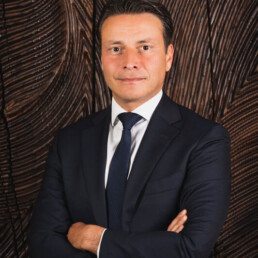
Key contacts

Key competencies
arrow_forward Private equity – Fund structuring
arrow_forward Venture capital funds
arrow_forward Real estate – Fund structuring
arrow_forward Hedge funds
arrow_forward Crypto funds
arrow_forward Private debt funds
arrow_forward Infrastructure funds
arrow_forward Sustainable finance and ESG funds
arrow_forward Regulatory and compliance
arrow_forward Restructuring and insolvency
arrow_forward Investment fund litigation